📕“This Generation Shall Not Pass”: The Fig Tree, Destruction Of The Temple In Jerusalem, and Who Was Still Alive When Jesus’ Prophecy Came True
Meta description
This Generation Shall Not Pass is an indepth study of Jesus' prophecy that people living in His era would be alive at Jerusalem's destruction.
Dive into an indepth study of Mark 13:28–30, Matthew 24:34, and Luke 21:32 in the context of the AD 70 destruction of Jerusalem and its temple.
Trace the biblical meaning of "generation,” and identify New Testament figures who were still alive during the Jewish revolt and the flight from Jerusalem.

📕This Generation Shall Not Pass Till All These Things Are Fulfilled Bible Verses
📕Biblical Meaning of Generation Audio
📕The Setting of Jesus' Prophecy That This Generation Shall Not Pass Till All These Things Are Fulfilled
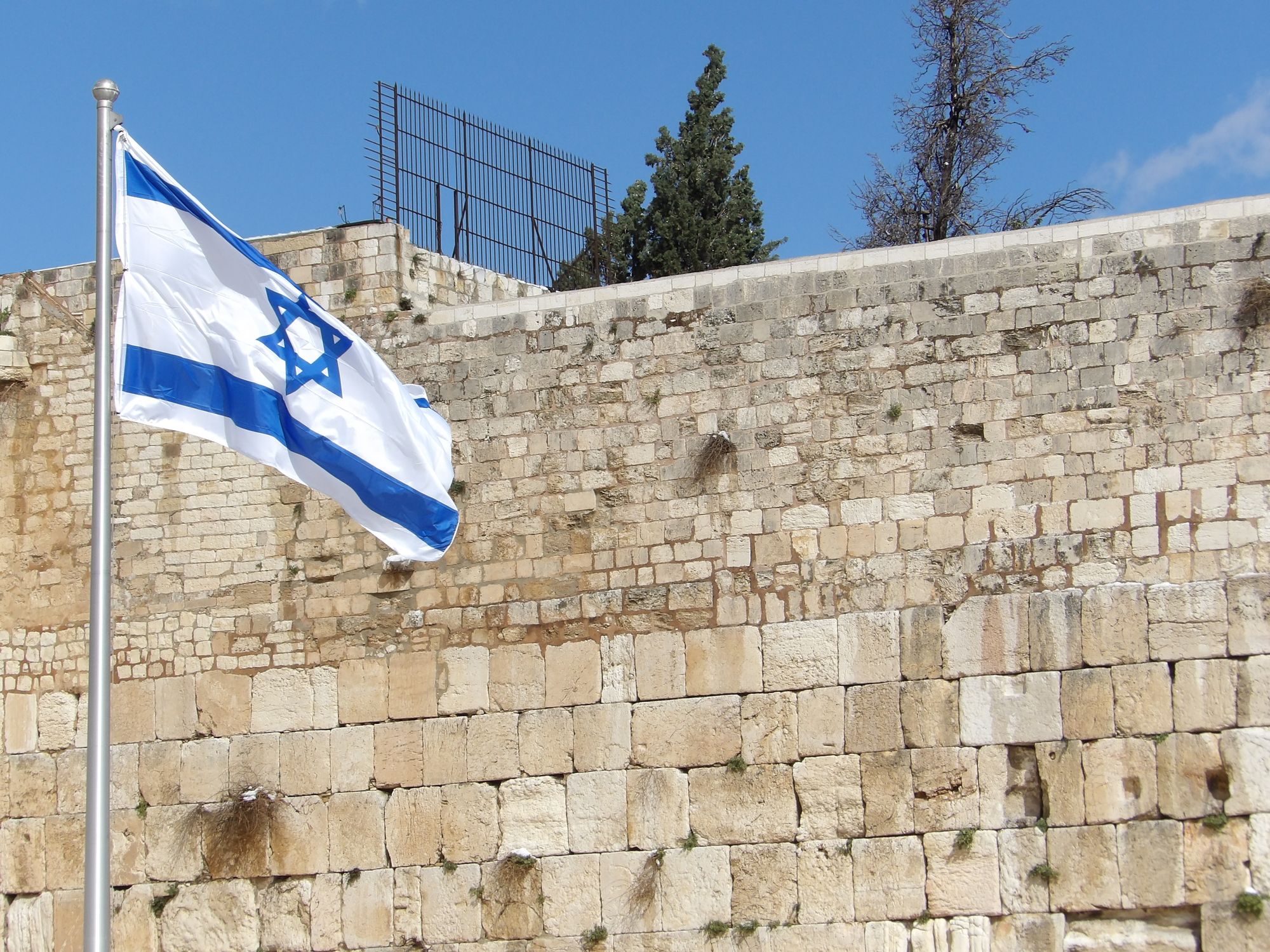
Jesus’ words about “this generation” are anchored in a very concrete setting. These words are part of His prophetic discourse of the throwing down of the stones of the Temple in Jerusalem, the Jewish revolt, the siege of Jerusalem and the impending judgment on Jerusalem.
His words could have two meanings:
- people alive in his era would witness the destruction...
- the timeline (millinneum) would end with the destruction of the Temple and of Jerusalem. Just as Enoch prophesied, the destruction took place at the end of the sixth week (6th millinneum), and very early in the seventh week (7th millinneum which began in 6001).
“Now learn a parable of the fig tree; When her branch is yet tender, and putteth forth leaves, ye know that summer is near:
So ye in like manner, when ye shall see these things come to pass, know that it is nigh, even at the doors.
Verily I say unto you, that this generation shall not pass, till all these things be done.”
“Verily I say unto you, This generation shall not pass, till all
these things be fulfilled.”
“Verily I say unto you, This generation shall not pass away, till all be fulfilled.”

📕The Phrase "This Generation" Is Linked To Specific Events In Jesus' Prophecy About The Destruction Of The Temple & Of Jerusalem
The phrase "this generation" is not in isolation. It is linked with specific events related to the destruction of the Temple and of Jerusalem:
- Imminent timing of the destruction—the fig tree would put forth leaves, armies would surround Jerusalem etc.
- Historical events—siege, desolation, and the literal throwing down of the Temple’s stones.
- A time-bound promise—those living then would not pass away until “all these things” were fulfilled.
📕The Phrase "This Generation" Is Also Linked To Jesus' Timeline Which Was The Last Century Of The Sixth Millennium
👉Understanding Jesus' timeline
By my understanding, Jesus was born during the last 100 years of the 6th millinneum. The timing of His Advent is not accidental, it is critical to the fulfillment of Enoch's prophecy which said that a man will ascend in the 6th week and that a destruction would take place in the house of dominion at its close. We therefore understand that Jesus was born in the last century of the sixth millinneum.'
To understand this prophetic implication, we also need to interpret “generation” as a 100-year time span. God Himself told us tthat a biblical generation is 100 years. Let's dive in.
In Genesis 15:13–16, God tells Abraham:
- Israel will be afflicted 400 years.
- They will return in the fourth generation.
If you divide 400 years by four generations, you get 100 years per generation. That gives you a biblical pattern where a “generation” can be understood as a century-long span of living people, overlapping parents, children, and grandchildren.
Note that the human lifespan is 120 years (Gensis 6:3). To fulfill the promise, biblical people including Abraham, Sarah, Jacob and his sons, Moses, Joshua lived to well over 100 years.
And he said unto Abram, Know of a surety that thy seed shall be a stranger in a land that is not theirs, and shall serve them; and they shall afflict them four hundred years;
And also that nation, whom they shall serve, will I judge: and afterward shall they come out with great substance.
And thou shalt go to thy fathers in peace; thou shalt be buried in a good old age.
But in the fourth generation they shall come hither again: for the iniquity of the Amorites is not yet full.
👉Rough Estimate of Jesus' Specific Timeline:
- He is born - Year 1
- Crucified - About Year 33
- Jewish Revolt - AD66
- Destruction of Jewish Temple - AD70.
- Sring Equinox on the Julian Calendar - March 21–22, AD 70 .
- God's New Year = 1st Nisan = March 23rd AD70 approx.
- Destruction of Temple early in God's New Year - 10 Loos (Roman) = 10 AV 6001 = August 29, AD 70 (Julian Calendar)
📕Which New Testament Leaders Were Still Alive Up To AD 70?
James the Just: brother of the Lord: a key anchor in the timeline
James the Just (brother of the Lord) lived up to AD62 when he was martyred. His lifespan shows that Jesus’ contemporaries did indeed live up to the period of judgment He foretold.
- Role: Leader of the Jerusalem church; first bishop of Jerusalem. library.biblicalarchaeology.org Bible Hub
- New Testament presence: Matthew 13:55; Mark 6:3; Acts 15; Acts 21; Galatians 1–2.
- Death: Josephus records his execution under the high priest Ananus around AD 62. JSTOR
James is crucial because:
- He is a named New Testament figure.
- He is still alive more than 30 years after Jesus’ ministry.
- He dies within the same generation that will soon see the revolt (AD 66) and the Temple’s destruction (AD 70).
Simeon son of Clopas and the Jerusalem succession
- Relationship: Traditionally described as a relative of Jesus (often “cousin”), son of Clopas.
- Office: Second bishop of Jerusalem after James. Bible Hub
- Timeline:
- He succeeds James after James’ martyrdom (post–AD 62).
- He is martyred under Emperor Trajan, around AD 107, according to Hegesippus and Eusebius. Bible Hub
Because Simeon lives past AD 70:
- He is alive during the Jewish revolt and the destruction of the Temple.
- He likely leads the Jerusalem believers in the Pella flight tradition.
📕Believers Were Alive Up To The Revolt And Fled As Warned
“But the people of the church in Jerusalem had been commanded by a revelation, vouchsafed to approved men there before the war, to leave the city and to dwell in a certain town of Perea called Pella.”
⭐Epiphanius (Panarion 29.7.7–8) gives even more detail, including the reason. This is extremely important because Epiphanius explicitly connects the flight to a command from Christ, a warning of the coming siege and the disciples obeying and relocating to Pella
“…all the disciples went to live in Pella because Christ had told them to leave Jerusalem and to go away since it would undergo a siege.” Wikipedia
“…all the disciples went to live in Pella because Christ had told them to leave Jerusalem and to go away since it would undergo a siege.” Wikipedia
⭐ A second passage from Epiphanius (Weights & Measures) confirms the same tradition:
“…when the city was about to be taken and destroyed by the Romans, it was revealed in advance to all the disciples by an angel of God that they should remove from the city… They sojourned as emigrants in Pella…” Wikipedia
“…when the city was about to be taken and destroyed by the Romans, it was revealed in advance to all the disciples by an angel of God that they should remove from the city… They sojourned as emigrants in Pella…” Wikipedia
📕 The Church Later Consisted Of Members From The Days of The Apostles Up To Hadrian's Siege (AD 132–135).
Eusebius records that there was a siege under Adrian/Hadrian which took place around (AD 132–135). Amazingly, there were persons alive from the days of the Apostles until that time.Hadrian's siege is about 65 years after Titus' destruction. That gives the average believer alive in Jesus' time an astonishing long lifespan as promised by God in Genesis 6: 3.
Eusebius is the source of this astonishing information:
1. The chronology of the bishops of Jerusalem I have nowhere found preserved in writing; [994] for tradition says that they were all short lived.
2. But I have learned this much from writings, [995] that until the siege of the Jews, which took place under Adrian, [996] there were fifteen bishops in succession there, [997] all of whom are said to have been of Hebrew descent, and to have received the knowledge of Christ in purity, so that they were approved by those who were able to judge of such matters, and were deemed worthy of the episcopate. For their whole church consisted then of believing Hebrews who continued from the days of the apostles until the siege which took place at this time; in which siege the Jews, having again rebelled against the Romans, were conquered after severe battles. Church History — Eusebius Pamphilius
👉Inferences about the lifespan of early believers (100-120 years):
- 60 in AD 70
- 90–95 in AD 100
- 115–120 in AD 135
- 50 in AD 70
- 95–100 in AD 115
- 110–115 in AD 135
If someone was born around AD 10–20, he/she would be:- 50–60 in AD 70
- 110–120 in AD 130
- 50–60 in AD 70
- 110–120 in AD 130
📕Apostles Who Were Alive in the Revolt Era
- 63). Christian Classics Ethereal Library
- Traditionally martyred in Rome under Nero, around AD 64–67. Christian Classics Ethereal Library
Both:
- Were born before or around Jesus’ time.
- Lived into the Neronian persecution, just before or overlapping the start of the Jewish revolt (AD 66).
- Are part of the same generation Jesus addressed—even if they likely died shortly before AD 70.
John the Apostle
- Lifespan (traditional): Often placed from early first century to around AD 100. patristic.io
- Role:
- One of the Twelve.
- Traditionally associated with Ephesus and the writing of the Gospel of John, Epistles, and Revelation.
If John lives to around AD 100:
- He is certainly alive during AD 70.
- He belongs to the original generation that heard Jesus’ prophecy.
- He witnesses the Temple’s destruction and the ongoing consequences for Israel and the church.
📕Other Apostles and Figures Likely To Be Alive To See The Destruction of Jerusalem
Early Christian tradition (as summarized by historians like Philip Schaff) suggests that many of the Twelve:
- Lived and ministered into the middle decades of the first century. Christian Classics Ethereal Library
- Were martyred or died in various regions (Asia Minor, Syria, etc.).
While exact dates are often conjectural, it is reasonable to say:
- Several apostles and early evangelists (e.g., Andrew, Thomas, Philip, Matthew) likely lived into the 50s and 60s, and some may have been alive during the early years of the revolt.
- They are part of the same generational cohort Jesus addressed in His fig tree parable.
📕Summary and Conclusion
- James the Just—alive until AD 62, leading the Jerusalem church, then martyred.
- Simeon son of Clopas—alive through AD 70, leading the flock that fled to Pella, martyred later under Trajan.
- Peter and Paul—alive into the Neronian persecution (AD 64–67), overlapping the beginning of the revolt.
- John the Apostle—living past AD 70, a surviving witness of the Temple’s fall and the long-term outworking of Jesus’ words.
During that timeline, Jesus’ prophecy was fulfilled:
- The Temple stones are thrown down.
- The city is besieged and destroyed.
- The Jerusalem church flees, as preserved in the Pella tradition.
- And many who heard Him—including apostles and leaders named in Scripture—were still alive somewhere along that path.
📕Which of Jesus' disciples were alive in AD66 and beyond?
I needed to discover which bible characters in Jesus timeline (aka people cited in the Gospels) were alive up to AD66 and beyond. I used this Prompt:
Copilot, I am focusing today on "that this generation shall not pass, till all these things be done." Jesus spoke these words in the context of the destruction of the Temple - stones of the temple will be thrown down. The Lord gave other signs preceding and during the destruction, but I need to explore Mar 13:28 and Matthew 24: 34 and Luke 21: 32.
Given the context in which Jesus used generation during His ministry, I infer that it means people living in the era of time. In terms of timeline also, a biblical generation is 100 years (Genesis 15).
Explore Josephus and the church historians to tell me names of Apostles and persons named in the bible who were still alive at the time of the revolt. For example, James the brother of Jesus was still alive in AD62 and was stoned by Herod,
Search and tell me who else was alive - anyone mentioned in the Gospels etc - Look in Josephus and early church historians, plus the flight from Jerusalem records.
Write a title, meta description and blog post style please.......
Mark 12: 28
Now learn a parable of the fig tree; When her branch is yet tender, and putteth forth leaves, ye know that summer is near
Mar 13:29 So ye in like manner, when ye shall see these things come to pass, know that it is nigh, even at the doors.
Mar 13:30 Verily I say unto you, that this generation shall not pass, till all these things be done.
NB: I edited title, meta description and content to suit my writing style, knowledge etc.


No comments:
Post a Comment