Featured

Book of Enoch The Apostle : Edited by Mercedes Moss

Book of Enoch The Apostle - Edited by Mercedes Moss ...

Showing posts sorted by relevance for query persecution. Sort by date Show all posts

Monday, May 18, 2026

Persecution Of The Church Prophecy Fulfilled Prior The AD70 Destruction Of Jerusalem

Fulfillment of Jesus' Prophecy Regarding Persecution Of The Church  Prior The AD70 Destruction Of Jerusalem


Meta Description

Discvoer the fulfillment of Jesus' prophecy regarding persecution of His church prior the AD70 destruction of Jerusalem


Persecution Of The Church  Prophecy Fulfilled Prior The AD70 Destruction Of Jerusalem


Bible verses in which Jesus prophesied about the persecution of His church

And Jesus went out, and departed from the temple: and his disciples came to him for to shew him the buildings of the temple.

Mat 24:2
And Jesus said unto them, See ye not all these things? verily I say unto you, There shall not be left here one stone upon another, that shall not be thrown down.

Mat 24:3
And as he sat upon the mount of Olives, the disciples came unto him privately, saying, Tell us, when shall these things be? and what shall be the sign of thy coming, and of the end of the world?

Mat 24:4
And Jesus answered and said unto them, Take heed that no man deceive you.

Mat 24:5
For many shall come in my name, saying, I am Christ; and shall deceive many.

Mat 24:6
And ye shall hear of wars and rumours of wars: see that ye be not troubled: for all these things must come to pass, but the end is not yet.

Mat 24:7
For nation shall rise against nation, and kingdom against kingdom: and there shall be famines, and pestilences, and earthquakes, in divers places.

Mat 24:8
All these are the beginning of sorrows.

Mat 24:9
Then shall they deliver you up to be afflicted, and shall kill you: and ye shall be hated of all nations for my name's sake.

Mat 24:10
And then shall many be offended, and shall betray one another, and shall hate one another.


And as he went out of the temple, one of his disciples saith unto him, Master, see what manner of stones and what buildings are here!


Mar 13:2
And Jesus answering said unto him, Seest thou these great buildings? there shall not be left one stone upon another, that shall not be thrown down.


Mar 13:3

And as he sat upon the mount of Olives over against the temple, Peter and James and John and Andrew asked him privately,


Mar 13:4
Tell us, when shall these things be? and what shall be the sign when all these things shall be fulfilled?


Mar 13:5
And Jesus answering them began to say, Take heed lest any man deceive you:


Mar 13:6
For many shall come in my name, saying, I am Christ; and shall deceive many.


Mar 13:7
And when ye shall hear of wars and rumours of wars, be ye not troubled: for such things must needs be; but the end shall not be yet.


Mar 13:8
For nation shall rise against nation, and kingdom against kingdom: and there shall be earthquakes in divers places, and there shall be famines and troubles: these are the beginnings of sorrows.


And as some spake of the temple, how it was adorned with goodly stones and gifts, he said,


Luk 21:6
As for these things which ye behold, the days will come, in the which there shall not be left one stone upon another, that shall not be thrown down.


Luk 21:7
And they asked him, saying, Master, but when shall these things be? and what sign will there be when these things shall come to pass?


Luk 21:8
And he said, Take heed that ye be not deceived: for many shall come in my name, saying, I am Christ; and the time draweth near: go ye not therefore after them.


Luk 21:9
But when ye shall hear of wars and commotions, be not terrified: for these things must first come to pass; but the end is not by and by.


Luk 21:10
Then said he unto them, Nation shall rise against nation, and kingdom against kingdom:


Luk 21:11
And great earthquakes shall be in divers places, and famines, and pestilences; and fearful sights and great signs shall there be from heaven.

Luk 21:12
But before all these, they shall lay their hands on you, and persecute you, delivering you up to the synagogues, and into prisons, being brought before kings and rulers for my name's sake.

Luk 21:13
And it shall turn to you for a testimony.

Luk 21:14
Settle it therefore in your hearts, not to meditate before what ye shall answer:

Luk 21:15
For I will give you a mouth and wisdom, which all your adversaries shall not be able to gainsay nor resist.

Luk 21:16
And ye shall be betrayed both by parents, and brethren, and kinsfolks, and friends; and some of you  shall they cause to be put to death.

Luk 21:17
And ye shall be hated of all men for my name's sake.

Luk 21:18
But there shall not an hair of your head perish.

Luk 21:19
In your patience possess ye your souls.


https://images.pexels.com/photos/14530768/pexels-photo-14530768.jpeg


Biblical and historical evidence of the persecution of the church before AD 70


1. Persecution begins in Jerusalem (early 30s AD)

From the very birth of the church, persecution was not an exception—it’s almost the atmosphere.


  • Temple authorities vs. the apostles (c. AD 30–33)
    Acts 4–5 shows Peter and John arrested, threatened, and beaten by the Jewish council (Sanhedrin) for preaching Jesus in the temple. This is probably within a year or two of the Day of Pentecost (often dated around AD 30).

  • The martyrdom of Stephen and the first great scattering (c. AD 33–35)
    In Acts 7–8, Stephen is stoned after his speech before the council, and “a great persecution” breaks out against the church in Jerusalem. Believers are scattered through Judea and Samaria, while Saul (Paul) “makes havoc of the church.”

  • This is the first organized persecution of Christians we see, and it is Jewish leadership–driven, not Roman.

  • Paul’s wrote that he persecuted the church (30s AD)
    In Galatians 1:13 and Philippians 3:6, Paul looked back and says he “persecuted the church of God.”
    In 1 Thessalonians 2:14–16, written around AD 50–51, he reminds the Thessalonian believers that the churches in Judea had already suffered from “their own countrymen,” just as the Thessalonians were suffering from theirs. This shows persecution was ongoing in Judea well before AD 70:

1Th 2:14
For ye, brethren, became followers of the churches of God which in Judaea are in Christ Jesus: for ye also have suffered like things of your own countrymen, even as they have of the Jews:

1Th 2:15
Who both killed the Lord Jesus, and their own prophets, and have persecuted us; and they please not God, and are contrary to all men:

1Th 2:16
Forbidding us to speak to the Gentiles that they might be saved, to fill up their sins alway: for the wrath is come upon them to the uttermost.


2. Persecution of the church by Herod persecution and the death of James (40s–60s AD)


Herod Agrippa I and the apostles (c. AD 42–44)


  • Acts 12 records that Herod Agrippa I “killed James the brother of John with the sword” and imprisoned Peter.
  • Josephus dates Agrippa’s death to AD 44, which helps us anchor this persecution in the early 40s. ecclesiasticalhistory.org


So by the mid‑40s, we have:

  • One apostle executed (James the son of Zebedee)
  • Another (Peter) miraculously delivered from prison
  • A clear pattern: local rulers in Judea are willing to use lethal force against Christian leaders.


The martyrdom of James the Lord’s brother (c. AD 62)

Josephus gives us a very important notice about James, the brother of Jesus:


  • In Antiquities 20.9.1, he reports that the high priest Ananus convened a council and had “James, the brother of Jesus who was called Christ” and others stoned as lawbreakers, during a brief gap in Roman oversight after the death of the procurator Festus (around AD 62).
  • This is not in Wars but in Antiquities, yet it’s the same historian you linked. Josephus’ dating of this event to the interregnum between Festus and Albinus places it firmly in the early 60s.


Early church historian Eusebius later quotes this passage and adds Christian tradition that James was a pillar of the Jerusalem church and died as a martyr (Ecclesiastical History 2.23).


So, by about eight years before AD 70, the leader of the Jerusalem church has been killed by a Jewish high priest using the machinery of the Sanhedrin.
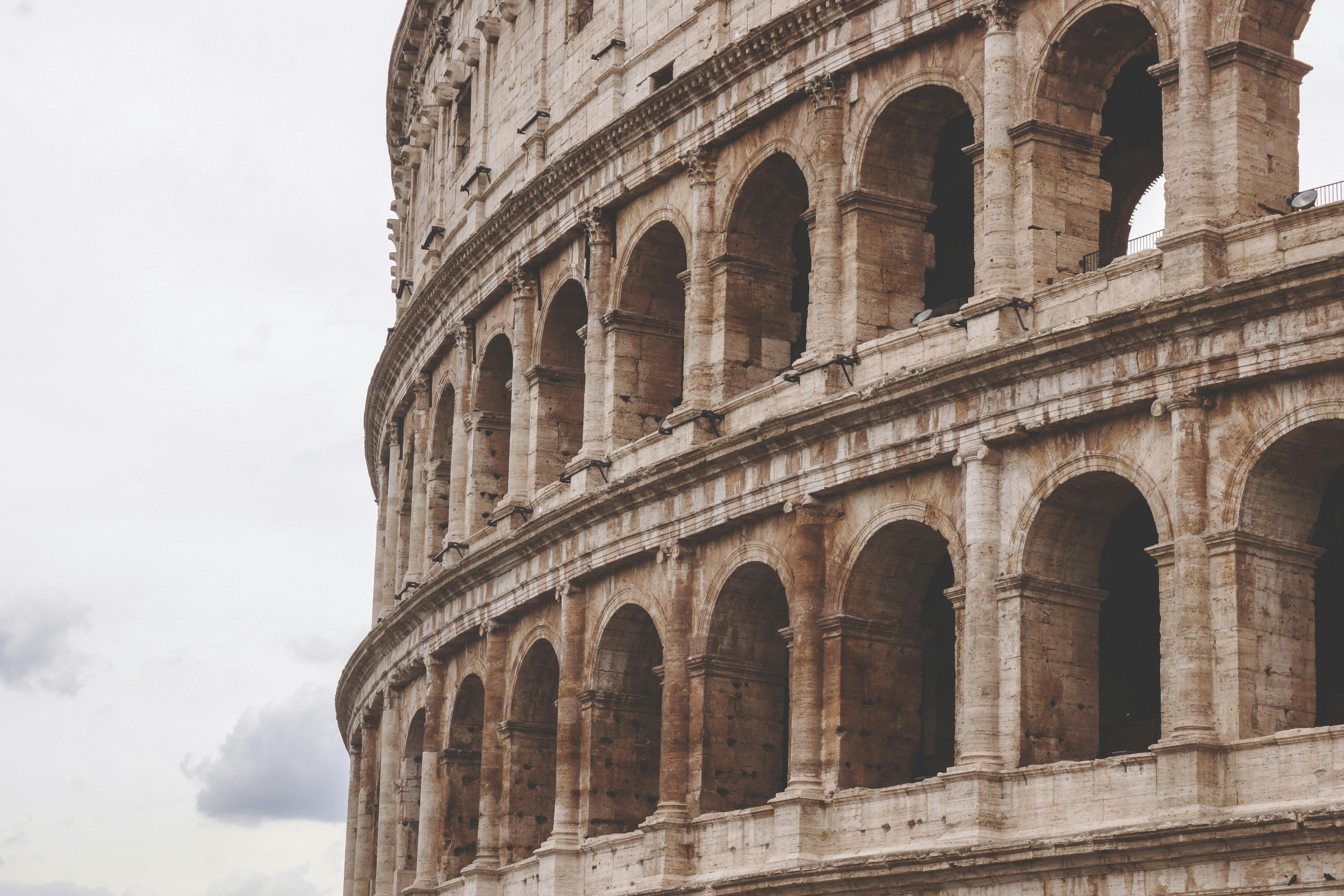


ancient rome

Ancient Colosseum arches in Rome,


3. The wider Roman world and Nero’s persecution (AD 64)


The Great Fire of Rome and Nero (AD 64)


The first clearly documented Roman persecution of Christians comes not in Judea, but in Rome itself.


  • The Roman historian Tacitus, writing in the early second century, describes the Great Fire of Rome in July AD 64 and Nero’s attempt to shift blame onto the Christians (Annals 15.44). Livius earlychurchtexts.com
  • Tacitus says Nero inflicted “the most exquisite tortures” on a “vast multitude” of Christians.


This is crucial for the AD 70 focus:


  • The Neronian persecution happens about six years before the destruction of Jerusalem.
  • It shows that by the 60s, Christianity is visible enough in Rome to be a convenient scapegoat.
  • It also confirms that Roman persecution, at this stage, is still local and episodic, not yet a universal empire‑wide policy.


A modern historical survey of the apostolic age places the Neronian persecution at AD 64, linking it with the likely martyrdoms of Peter and Paul in Rome. ecclesiasticalhistory.org


Local and social persecution across the empire (40s–60s)

Even before Nero, Christians were facing:

  • Mob violence and local hostility (e.g., Acts 13–19: Pisidian Antioch, Iconium, Lystra, Philippi, Thessalonica, Ephesus).
  • Accusations of disloyalty, atheism, and social disruption—themes that later Roman writers and modern historians see as key motives for persecution. Oxford Academic


So, in the decades leading up to AD 70, persecution is:


  • Jewish‑led in Judea and surrounding regions
  • Mixed Jewish and Gentile hostility in the provinces
  • Imperial and spectacular in Rome under Nero


4. Early Christian writers looking back on this period


Later Christian writers, especially from the late first and early second centuries, look back on this pre‑70 period as a time of suffering and witness.


1 Clement (c. AD 95)


  • 1 Clement 5–6, written from Rome to Corinth, recalls the “sudden and repeated calamities and reverses” that had happened to the church, and specifically mentions Peter and Paul as examples of faithful suffering and martyrdom.
  • The letter is usually dated to around AD 95, but it looks back to events in the 60s, including the Neronian persecution.


Eusebius (early 4th century, preserving earlier traditions)


In Ecclesiastical History 2.25, Eusebius:

  • Attributes the first imperial persecution to Nero,
  • Connects it with the martyrdoms of Peter and Paul,
  • And treats it as the beginning of a pattern of Roman hostility that would continue in later centuries.


While Eusebius wrote much later, he  drew on earlier sources and traditions, some of which we can cross‑check with Tacitus and 1 Clement.


ancient quill
     Quill pen


5. Josephus as a background witness to the storm (30s–70)

Josephus does not give us a narrative of Christian persecution, but he is invaluable for the political and social background in which the church suffered.


Turmoil in Judea

In the Preface to The Wars of the Jews, Josephus describes:


  • The Jewish–Roman war as “the greatest of all” wars,
  • The internal seditions, tyrants, and robbers within Judea,
  • And the unparalleled calamities that befell the Jewish nation leading up to and including the destruction of Jerusalem. gutenberg.org


This matters because:


  • The Jerusalem church lived inside this pressure cooker—political unrest, zealot movements, Roman crackdowns, famine, and factional violence.
  • When you read Hebrews 10:32–34 or 1 Peter, with their references to suffering, slander, and confiscation of property, Josephus helps you feel the historical weight behind those words.


Dating and anchoring events

Josephus also helps us date:


So, while Josephus rarely mentions Christians directly, he is like the historical scaffolding around the New Testament story of persecution.


6. Pulling it together: what persecution looked like before AD 70


If we step back and look at the period from AD 30 to 70, a pattern emerges:


  • Early 30s:

    • Persecution in Jerusalem led by the Sanhedrin (Acts 4–8).
    • Stephen’s martyrdom and the scattering of believers.
  • 40s:

    • Herod Agrippa I kills James and imprisons Peter (Acts 12; anchored by Josephus to c. AD 44).
    • The gospel spreads further into Gentile territory, bringing new local hostilities.
  • 50s:

    • Paul’s letters (e.g., 1 Thessalonians, 2 Corinthians) assume ongoing persecution as a normal part of Christian life.
    • Local riots and legal troubles in city after city (Acts 13–19).
  • Early 60s:

    • James the Lord’s brother executed in Jerusalem (Josephus, Antiquities 20.9.1).
    • Paul under Roman custody in Caesarea and then Rome.
  • AD 64:

  • AD 70:

    • Destruction of Jerusalem and the temple—Josephus’ central subject in Wars—which effectively ends the old center of the Jewish Christian community and fulfills Jesus’ warnings in the Gospels.


So, persecution before AD 70 is multi‑layered:


  • Religious (Jewish authorities resisting the claim that Jesus is Messiah)
  • Social (neighbors, mobs, and local elites stirred up against Christians)
  • Political (local rulers like Herod Agrippa I, and eventually Nero in Rome)


And yet, in the middle of all this, the church grows, writes Scripture, and leaves us a trail of witnesses—biblical, Jewish, and Roman—who together confirm that this story is deeply rooted in real history, not myth.


🌍 Persecution of the Church Today


Even though many of us worship freely, millions of Christians around the world still face discrimination, harassment, imprisonment, or violence simply because they follow Jesus. The situations vary from country to country, but several regions consistently appear in global reports as high‑risk areas.


Sub‑Saharan Africa

In nations like Nigeria, Cameroon, and parts of the Sahel, Christians often face attacks from extremist groups, village‑level violence, and kidnappings. In northern Nigeria especially, entire communities have been displaced. What makes this region heartbreaking is that persecution often comes from both militant groups and local social pressure, leaving believers vulnerable on multiple fronts.


East Asia

In China, the church is growing rapidly — and that growth sometimes brings increased scrutiny. Some congregations face restrictions on gathering, surveillance, or pressure to register with state‑approved religious bodies. While many believers worship freely, others experience church closures or limitations on discipleship and evangelism.


North Korea

Often considered the most dangerous place in the world to be a Christian, North Korea treats religious belief as a threat to the state. Believers who are discovered may face imprisonment or forced labor. Most Christians there worship in secret, passing down faith quietly within families.


South Asia

In India, some regions experience rising hostility toward Christians, especially converts from Hindu backgrounds. Believers may face social exclusion, pressure from family or community, or accusations of “forced conversion.” While many Christians worship openly, others face real challenges depending on their location.


🌍 Middle East & North Africa

In places like Iran, Afghanistan, and parts of the Arabian Peninsula, Christians — especially converts from Islam — may face severe consequences, including imprisonment or threats from family or community. Yet underground churches continue to grow, often with remarkable courage and faith.


❤️ A Thread That Connects Then and Now

Just like the early believers in Jerusalem, Judea, and the wider Roman world, today’s persecuted Christians often live out their faith quietly, faithfully, and with incredible resilience. Their stories remind us that the church has always grown in the soil of both joy and hardship — and that Jesus’ promise, “I am with you always,” still holds true across every border and generation.


🌎 North America

In the United States and Canada, Christians generally enjoy strong constitutional protections. However, believers sometimes face legal or social pressures that can feel restrictive, especially around public preaching, evangelism, or expressing biblical views in workplaces or schools.


United States

  • Public preaching restrictions: Some cities require permits for street preaching or limit amplification, which can lead to fines if rules aren’t followed.

  • Campus limitations: Christian clubs on some university campuses have faced challenges when their leadership requirements (e.g., leaders must be Christian) conflict with campus nondiscrimination policies.

  • Workplace pressure: Employees may feel hesitant to speak about faith due to Human Resources policies or fear of being misunderstood.

This isn’t persecution in the form of cultural and legal pressure can make open Christian expression more complicated.


Canada

  • Speech laws: Canada’s hate‑speech and discrimination laws are broad, and some pastors or street preachers have been fined or detained when authorities believed their public messages crossed legal boundaries.

  • Zoning and gathering restrictions: Some churches have faced challenges with zoning laws or public‑health enforcement that felt uneven or targeted.


Again, while the persecution is the same degree as in high‑risk nations, it creates a climate where Christians may feel they must “watch their words” more carefully.


Persecution of Christians in the United Kingdom - watch this video to learn more.


🌎 South America

South America is overwhelmingly Christian, but the pressures vary by country.

Nicaragua

  • Churches and pastors have reported government pressure, surveillance, or restrictions when their preaching is seen as politically critical.


Cuba

  • Some churches face registration requirements, limits on gatherings, or monitoring by authorities.

  • House churches may be pressured to stop meeting or relocate.


Brazil & Colombia

  • In most urban areas, Christians worship freely.

  • In rural zones controlled by gangs or armed groups, pastors may face threats if their preaching challenges criminal activity or calls people away from gang life.


India - learn more about the persecution of Christians.


Conclusion

The persecution of Christians today seems to fall on a spectrum:

  • Severe and violent (North Korea, Nigeria, Afghanistan)

  • Harsh legal or political pressure (China, Iran, Nicaragua)

  • Restrictions and social hostility (U.S., Canada, parts of South America)


The early church experienced the same range of persecution — from social shaming to imprisonment to martyrdom. So when we talk about persecution today, it’s not about comparing who “has it worse,” but about recognizing that believers across the world face different kinds of pressure for the same faith.


The persection of the church of the Lord Jesus is really sad and ironic, because true Christian believers are the most peaceful, law -abiding and productive citizens of nations.


Meantime, many nations tolerate acts of violence against Christians, acts for which their aggressors should be jailed. In many instances, these same aggressors are seen as disruptive threats to other nations, with task forces being required to cease their operations.

I call on the international community to take action on behalf of Christians, an act for which the Lord Jesus will help you in your own war against the spirit of terror.


Learn more about the persecuted church. Pray and donate where you can:

The Voice of the Martyrs

International Christian Concern


References 


Biblical texts


Holy Bible, King James Version. (1769/2017). Cambridge University Press. (Original work published 1611)


Ancient Jewish and Roman sources


Josephus, F. (2001). The wars of the Jews; or, The history of the destruction of Jerusalem (W. Whiston, Trans.). Project Gutenberg. (Original work published ca. 75 CE)


Josephus, F. (1987). Jewish antiquities (H. St. J. Thackeray et al., Trans.). Harvard University Press. (Original work published ca. 93–94 CE)


Tacitus. (n.d.). Annals 15.44 (J. E. Lendering, Trans.). Livius.org. Retrieved May 17, 2026, from Livius website. Livius


Early Christian writers

Clement of Rome. (2007). First letter to the Corinthians (1 Clement). In M. W. Holmes (Ed. & Trans.), The Apostolic Fathers: Greek texts and English translations (3rd ed., pp. 32–101). Baker Academic.


Eusebius of Caesarea. (1999). Ecclesiastical history (P. L. Maier, Trans.). Kregel.


Modern scholarship


Corke-Webster, J. (2023). By whom were early Christians persecuted? Past & Present, 261(1), 3–46. Oxford Academic


Schaff, P. (2022). Chapter 23: Chronology of the apostolic age. In History of the Christian church (Vol. 1). Retrieved May 17, 2026, from History of the Christian Church website. ecclesiasticalhistory.org


Tuesday, June 2, 2026

How Persecution Propelled The Gospel To Nations Before AD70

⭐ How Persecution Propelled The Gospel To Nations Before AD70


Meta Description

Discover bible texts that show that persecution of the church propelled the gospel locally and to nations of the era before the AD70 destruction of the Temple.

🟦 Martyrdom of Stephen, The Persecution, Scattering & Spread of the Gospel

Act 8:1
And Saul was consenting unto his death. And at that time there was a great persecution against the church which was at Jerusalem; and they were all scattered abroad throughout the regions of Judaea and Samaria, except the apostles.


Act 8:2
And devout men carried Stephen to his burial, and made great lamentation over him.

Act 8:3
As for Saul, he made havock of the church, entering into every house, and haling men and women committed them to prison.

Act 8:4
Therefore they that were scattered abroad went every where preaching the word.


👉Highlights from the text


✅Event: Persecution after Stephen’s death

Result: Believers scattered

Action: They preached everywhere


Key lines:

  • “There was a great persecution against the church which was at Jerusalem; and they were all scattered abroad throughout the regions of Judaea and Samaria…”
  • “They that were scattered abroad went every where preaching the word.”

Why this matters:

This directly fulfills Jesus’ prophecy in Acts 1:8 tbat they would preach in all Judea and Samaria:


But ye shall receive power, after that the Holy Ghost is come upon you: and ye shall be witnesses unto me both in Jerusalem, and in all Judaea, and in Samaria, and unto the uttermost part of the earth.


NB: Jesus had preached and healed in Judea and Samaria during His ministry.


🟦 Scattered believers preach to Jews and Grecians: Acts 11:19–21


Act 11:19
Now they which were scattered abroad upon the persecution that arose about Stephen travelled as far as Phenice, and Cyprus, and Antioch, preaching the word to none but unto the Jews only.


Act 11:20
And some of them were men of Cyprus and Cyrene, which, when they were come to Antioch, spake unto the Grecians, preaching the Lord Jesus.


Act 11:21
And the hand of the Lord was with them: and a great number believed, and turned unto the Lord.


👉Highlights from the text

Event: The same scattered believers from Acts 8 keep traveling

Regions: Phoenicia, Cyprus, Antioch

Action: Preaching to Jews, then Grecians (Jews who spoke Greek and practiced some of the culture)


Key lines:

  • “They which were scattered abroad upon the persecution… travelled as far as Phenice, and Cyprus, and Antioch…”
  • “Some… spake unto the Grecians, preaching the Lord Jesus.”
  • “A great number believed.”


Why this matters:

This is the spread of the gospel outside of Jerusalem and home territory — not by apostles, but by ordinary scattered believers.


Monday, June 1, 2026

The Gospel Will Be Preached Worldwide Before The Destruction Of The Temple

Jesus' Prophecy That The Gospel Will Be Preached Worldwide Before The Destruction Of The Temple


Meta  Description


Discover the fulfillment of Jesus' prophecy that the gospel will be preached before the destruction of the Temple in Jerusalem.


street preacher


Bible Verses In Which Jesus Prophesied Worldwide Preaching Before The Temple's Destruction


And Jesus went out, and departed from the temple: and his disciples came to him for to shew him the buildings of the temple.


Mat 24:2
And Jesus said unto them, See ye not all these things? verily I say unto you, There shall not be left here one stone upon another, that shall not be thrown down.


Mat 24:3
And as he sat upon the mount of Olives, the disciples came unto him privately, saying, Tell us, when shall these things be? and what shall be the sign of thy coming, and of the end of the world?...


Mat 24:14
And this gospel of the kingdom shall be preached in all the world for a witness unto all nations; and then shall the end come.

Thursday, September 4, 2025

Israel Third Temple Update: Daniel 8 Prophecy Fulfilled

Israel Third Temple Update:  Deep Dive Into The Daniel 8 Prophecy 


Meta Description:

In Israel Third Temple Update: Daniel's Prophecy Fulfilled, we take a deep dive into the Daniel 8 prophecy. Is the stage set for the Third Temple In Jerusalem? Read on to learn more.


Israel Third Temple Update


Significance of the Temple In Jerusalem For Israelites

The temple in Jerusalem was of immense significance to the Israelites, serving as the very heart of their spiritual, national, and cultural life. Its establishment was not merely about building a grand structure, but about fulfilling a core belief about their relationship with God.

The Temple in Jerusalem Was Established As A Worship Center To The Most High God

According to Israelite belief, the Temple was established to be a  dwelling place for God on Earth. Before the Temple, the Israelites had the Tabernacle—a portable sanctuary that housed the Ark of the Covenant, which was a symbol of God's presence.

When King David conquered Jerusalem and made it his capital, he wanted to build a permanent structure to house the Ark and serve as the new central place of worship for all the tribes of Israel. However, God forbade David from building it because he had "shed much blood." The task was given to his son, Solomon.

The completion of the Temple was seen as the fulfillment of a divine promise and a sign that God's presence, the Shekinah glory, would rest among His people.

The significance of the Temple for Israelites:


  • A Symbol of God's Presence: The Temple was the most sacred place on Earth for the Israelites. The innermost room, the Holy of Holies, was considered the very dwelling place of God. This made the Temple a tangible symbol of God's covenant with His people and His desire to be in their midst.7

  • The Center of Religious Life: The Temple was the sole location for many of the most important religious practices. It was where priests offered daily sacrifices for atonement, thanksgiving, and communion with God. It was also the destination for the three annual Feasts of God — Passover, Shavuot, and Sukkot. During these feasts, Israelites from all over the land would travel to Jerusalem to worship and celebrate.

  • A Unifying Force: The Temple served as a powerful symbol of unity for the twelve tribes of Israel.  It was a communal gathering place that brought people together, reinforcing their shared identity, laws, and history. The Jerusalem Temple  was a central hub for not only religious worship but also legal and administrative functions. One of these was meetings for the Sanhedrin, the highest Jewish court.

  • A Place of Prayer and Hope: Even after its destruction, the Temple remained a focal point for Jewish prayer and a symbol of their hopes for the future. The memory of the Temple and the longing for its restoration are deeply woven into Jewish tradition, liturgy, and daily life, as seen in prayers for its rebuilding and mourning customs such as the fast of Tisha B'Av.

Israel Third Temple Update

Timeline of the Jerusalem Temple

Here's a brief overview of the Jerusalem Temple:

First Temple Period (c. 957 BCE - 586 BCE)


  • c. 957 BCE: King Solomon, son of King David, built the First Temple in Jerusalem on Mount Moriah. It was a magnificent structure designed to house the Ark of the Covenant and serve as the central place of worship for the Israelites.

  • 7th Century BCE: The First Temple underwent a series of reforms and renovations, most notably under King Hezekiah and later King Josiah, who sought to centralize worship and remove idolatrous practices.

  • 586 BCE: The Babylonian army, led by King Nebuchadnezzar II, besieged Jerusalem. They plundered and destroyed the First Temple, marking the end of the Kingdom of Judah and the beginning of the Babylonian exile.


Second Temple Period (c. 516 BCE - 70 CE)


  • c. 538 BCE: The Persian King Cyrus the Great issued a decree allowing the exiled Jews to return to Jerusalem and rebuild the temple.

  • c. 516 BCE: Construction of the Second Temple was completed under the leadership of Zerubbabel and High Priest Jeshua. This temple was not as grand as the first but served its purpose as the new center for Jewish worship.

  • c. 20 BCE: King Herod the Great initiated a massive renovation and expansion of the Second Temple. The project, which lasted for decades, transformed the temple into a sprawling and architecturally impressive complex. This is often referred to as Herod's Temple.

  • c. 66 CE: The Great Jewish Revolt against Roman rule began. The temple became a fortress for Jewish rebels.

  • 70 CE: The Roman army, led by General Titus, captured Jerusalem after a long siege. The city was burned, and Herod's Temple was completely destroyed, leaving only the Western Wall as a remnant. The destruction of the Second Temple marked a turning point in Jewish history, leading to the end of the temple-based sacrificial system and the rise of Rabbinic Judaism.


Israel Third Temple Update


Daniel's Prophecy About The Cleansing Of The Temple


Daniel the prophet was shown the timeline related to the rebuilding of the temple. This was given by God in a prophetic dream about beasts which represented THREE world superpowers that would succeed Nebuchadnezzar's kingdom. 

These three world kingdoms or superpowers were represented by a/an :

1. ram with two horns, one of which was longer than the other (Daniel 8: 3 & 4).
.
2. goat with a prominent horn between its eyes (Daniel 8: 5-8).

3. horn which arose from the 4 horns which replaced the goat's horns.  

Importance of the horn:


This horn  had a very bad effect on the Jerusalem Temple. It:
  • took away the daily sacrifice (Daniel 8: 11).
  • threw down the sanctuary (Daniel 8: 11).
  • conquered the Lord’s people because of their rebellion (Daniel 8: 12).
  • Threw truth down to the ground (Daniel 8: 12).

Daniel’s Vision of a Ram and a Goat - Daniel 8: 1 - 14 


In the third year of King Belshazzar’s reign, I, Daniel, had a vision, after the one that had already appeared to me. 

2 In my vision I saw myself in the citadel of Susa in the province of Elam; in the vision I was beside the Ulai Canal. 

3 I looked up, and there before me was a ram with two horns, standing beside the canal, and the horns were long. One of the horns was longer than the other but grew up later. 

4 I watched the ram as it charged toward the west and the north and the south. No animal could stand against it, and none could rescue from its power. It did as it pleased and became great.

5 As I was thinking about this, suddenly a goat with a prominent horn between its eyes came from the west, crossing the whole earth without touching the ground. 

6 It came toward the two-horned ram I had seen standing beside the canal and charged at it in great rage. 

7 I saw it attack the ram furiously, striking the ram and shattering its two horns. The ram was powerless to stand against it; the goat knocked it to the ground and trampled on it, and none could rescue the ram from its power. 

8 The goat became very great, but at the height of its power the large horn was broken off, and in its place four prominent horns grew up toward the four winds of heaven.

9 Out of one of them came another horn, which started small but grew in power to the south and to the east and toward the Beautiful Land. 

10 It grew until it reached the host of the heavens, and it threw some of the starry host down to the earth and trampled on them. 

11 It set itself up to be as great as the commander of the army of the Lord; it took away the daily sacrifice from the Lord, and his sanctuary was thrown down. 

12 Because of rebellion, the Lord’s people and the daily sacrifice were given over to it. It prospered in everything it did, and truth was thrown to the ground.

13 Then I heard a holy one speaking, and another holy one said to him, “How long will it take for the vision to be fulfilled—the vision concerning the daily sacrifice, the rebellion that causes desolation, the surrender of the sanctuary and the trampling underfoot of the Lord’s people?”

14 He said to me, “It will take 2,300 evenings and mornings; then the sanctuary will be reconsecrated.”


Israel Third Temple Update:


Archangel Gabriel Interpreted The Meaning of the Ram and Goat

As Daniel struggled to understand the vision, its meaning was revealed by Archangel Gabriel:

1. ramThe two-horned ram that you saw represents the kings of Media and Persia (Daniel 8: 20).

2. goat: The shaggy goat is the king of Greece  (Daniel 8: 21)

3. little horn  -  He is a fierce looking king that will cause astounding devastation ... He will destroy those who are mighty, the holy people (Daniel 8: 23 & 2).


Israel Third Temple Update


Archangel Gabriel's Interpretation Of The Ram, Goat and Little Horn - Daniel 8: 15 - 27


15 While I, Daniel, was watching the vision and trying to understand it, there before me stood one who looked like a man. 

16 And I heard a man’s voice from the Ulai calling, “Gabriel, tell this man the meaning of the vision.”

17 As he came near the place where I was standing, I was terrified and fell prostrate. “Son of man,” he said to me, “understand that the vision concerns the time of the end.”

18 While he was speaking to me, I was in a deep sleep, with my face to the ground. Then he touched me and raised me to my feet.

19 He said: “I am going to tell you what will happen later in the time of wrath, because the vision concerns the appointed time of the end.

20 The two-horned ram that you saw represents the kings of Media and Persia. 

21 The shaggy goat is the king of Greece, and the large horn between its eyes is the first king. 

22 The four horns that replaced the one that was broken off represent four kingdoms that will emerge from his nation but will not have the same power.

23 “In the latter part of their reign, when rebels have become completely wicked, a fierce-looking king, a master of intrigue, will arise. 

24 He will become very strong, but not by his own power. He will cause astounding devastation and will succeed in whatever he does. He will destroy those who are mighty, the holy people. 

25 He will cause deceit to prosper, and he will consider himself superior. When they feel secure, he will destroy many and take his stand against the Prince of princes. Yet he will be destroyed, but not by human power.

26 “The vision of the evenings and mornings that has been given you is true, but seal up the vision, for it concerns the distant future.”

27 I, Daniel, was worn out. I lay exhausted for several days. Then I got up and went about the king’s business. I was appalled by the vision; it was beyond understanding.


Israel Third Temple Update


History Has Already Confirmed The Fulfillment Of Daniel's Prophecy And Its Interpretation

Table 1 shows the approximate timeline of the World Kingdoms/Empires/Superpowers that God showed to Daniel. We can see clearly that God foresaw everything and revealed it all to help us know where we are in time.


Table 1: Timeline Of The Empires In Daniel's Vision

Symbol from Daniel's Dream (Chapter 8)Archangel Gabriel's InterpretationHistorical Fulfillment & Timeline
Two-horned ram"The kings of Media and Persia" (Daniel 8:20)Represents the Medo-Persian Empire (550–330 BC). The two horns symbolize the Medes and the Persians, with the second horn (Persia) growing taller, signifying its dominance.

Shaggy goat with a large horn

"The king of Greece" (Daniel 8:21); the large horn is "the first king"

Represents the Greek Empire (330–146 BC), led by Alexander the Great (the large horn). The goat's swiftness symbolizes Alexander's rapid conquest of the Persian Empire.

Four horns replacing the broken horn

"Four kingdoms will arise from his nation, but not with his power" (Daniel 8:22)

After Alexander's death, his empire was divided among four of his generals (the Diadochi).

 These four Hellenistic kingdoms were the Ptolemaic Kingdom (Egypt), the Seleucid Empire (Syria/Mesopotamia), the Antigonid dynasty (Macedonia/Greece), and the Attalid dynasty (Anatolia).

"Little horn" that grows from one of the four horns

"A fierce-looking king, a master of intrigue... He will destroy the mighty, the holy people" (Daniel 8:23-24)

Roman Empire's destruction of 70AD


The Fourth Horn Is Widely Believed To Be Antiochus IV Epiphanes of the Seleucid Empire


This figure is widely interpreted as Antiochus IV Epiphanes of the Seleucid Empire. He persecuted the Jews, desecrated the Jerusalem Temple (the "holy people"), and fought against the power of God, fulfilling the description of a devastating and arrogant ruler.

Why Antiochus IV Epiphanes could not be the fourth horn

Antiochus IV Epiphanes ruled the Seleucid Empire from 175 BC to 164 BC. The Seleucid Empire is one of the four horns that arose from the Grecian Empire. He was a king of this Hellenistic kingdom, which was centered in Syria and Mesopotamia. 

This does not fulfill Daniel's prophecy that a little horn would arise at the LATTER PART OF THE REIGN OF THE FOUR HORNS. 

 In the latter part of their reign, when rebels have become completely wicked, a fierce-looking king, a master of intrigue, will arise (Daniel 8: 23). 


Here are some key details about Antiochus' reign, which is relatively early in the period of the four horns:


  • Start of Rule: In 175 BC, his brother, Seleucus IV Philopator, was assassinated.2 With the rightful heir, his nephew Demetrius, being a hostage in Rome, Antiochus seized the throne for himself with the help of allies.3

  • Persecution of the Jews: He is most infamous for his persecution of the Jews, which included the desecration of the Second Temple in Jerusalem. This action triggered the Maccabean Revolt.

  • End of Rule: Antiochus IV died in 164 BC while on a military campaign in the eastern part of his empire.

Importantly, his timeline is  approximately 175 - 164 BCE. If he were the fourth horn, the temple should have already been rebuilt in 2300 days from the time he desecrated it:

13 Then I heard a holy one speaking, and another holy one said to him, “How long will it take for the vision to be fulfilled—the vision concerning the daily sacrifice, the rebellion that causes desolation, the surrender of the sanctuary and the trampling underfoot of the Lord’s people?”

14 He said to me, “It will take 2,300 evenings and mornings; then the sanctuary will be reconsecrated.”


Israel Third Temple Update


Rethinking The Roman Empire As The Little Horn That Conquered The Four Horns 


The Roman Empire did not arise from the four Hellenistic empires, but it conquered them.  This is consistent with Daniel 8:


22 The four horns that replaced the one that was broken off represent four kingdoms that will emerge from his nation but will not have the same power.

23 “In the latter part of their reign, when rebels have become completely wicked, a fierce-looking king, a master of intrigue, will arise. 

24 He will become very strong, but not by his own power. He will cause astounding devastation and will succeed in whatever he does. He will destroy those who are mighty, the holy people


Here's how the Roman Empire fulfilled Daniel's prophecy

The Roman Republic expanded its territory through a long series of military conflicts, eventually bringing the last remaining Hellenistic kingdoms under its control.2 The transition to the Roman Empire was a result of internal political turmoil within Rome, not the direct continuation of a Hellenistic state.


The Rise of the Roman Empire

The Roman Empire's rise was a gradual process that began with the Roman Republic.3 It was not a single event but a series of military conquests and internal political transformations.4

  • Roman Republic Expansion: Beginning as a city-state, Rome expanded its control over the Italian peninsula and then engaged in the Punic Wars against Carthage (264–146 BC) to become the dominant power in the Mediterranean.5

  • Civil Wars: The vast wealth and new territories brought with them social and political instability.6 The Republic was torn apart by a series of civil wars between powerful generals, most famously between Julius Caesar and the Senate, and later between his heir, Octavian (Augustus), and Mark Antony.7

  • Establishment of the Empire: After Octavian defeated his rivals, he consolidated power, and in 27 BC, the Senate granted him the title "Augustus," effectively making him the first Roman Emperor.8 While maintaining the appearance of the Republic, he held absolute authority, marking the official end of the Roman Republic and the beginning of the Roman Empire.9


The Hellenistic Empires and Rome

The relationship between the Roman Republic (and later Empire) and the Hellenistic kingdoms was one of conquest and cultural absorption.10 The Roman expansion into the Greek-speaking East led to the Roman Republic defeating the four main Hellenistic successor kingdoms:11

  1. Antigonid Kingdom of Macedon: Rome defeated the Antigonids in a series of wars, finally conquering them in 168 BC.12

  2. Seleucid Empire: Rome fought the Seleucids in the Roman–Seleucid War (192–188 BC), stripping them of their territory in Anatolia.13 The rest of the empire was later absorbed in 64 BC.

  3. Attalid Kingdom of Pergamon: The last king of Pergamon, Attalus III, bequeathed his kingdom to Rome in 133 BC, who then turned it into the province of Asia.

  4. Ptolemaic Kingdom of Egypt: This was the last Hellenistic kingdom to fall. After Octavian defeated Mark Antony and the Ptolemaic queen Cleopatra VII in 31 BC, he annexed Egypt as a Roman province in 30 BC, which marked the end of the Hellenistic era.

Although Rome defeated the Hellenistic  empires militarily, it was heavily influenced by their culture. The Romans adopted and adapted Greek art, philosophy, religion, and literature, leading to the rich Greco-Roman culture that would define the Roman Empire for centuries.


More coming next week in the will of the Lord. The clue lies in Jesus' prophecy confirming Daniel's revelation about the destruction of Jerusalem, which by the way, has already taken place.


Related Posts

Popular Posts This Week